
The catch rate across all our lines varies with the time of year, availability of alternative food and the weather. We are consistently finding catch rates for rats and possums higher at present because other sources of food for the predators have reduced. However, number of stoats and weasels caught seems low.
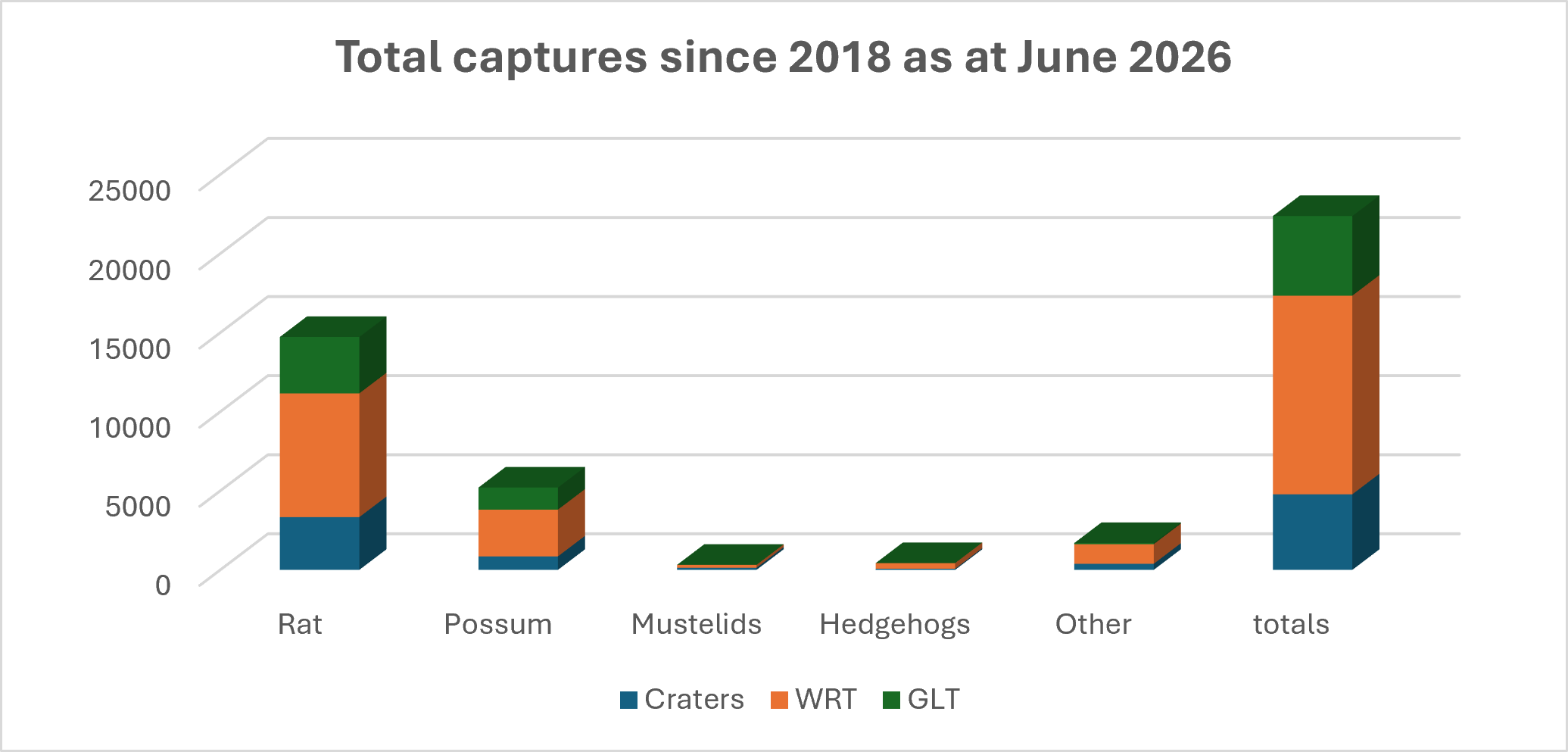
The good news is that the total number of predators captured since the programme began in 2018 has now reached the huge tally of 22,374 with the most caught in the Waikato River Corridor (orange) lines, but numbers growing in the Great Lake Trails with the addition of the new trap lines.
If we look at monthly catch rates for each of the three main areas it becomes easy to see the cyclical nature of catching across our trapping networks.
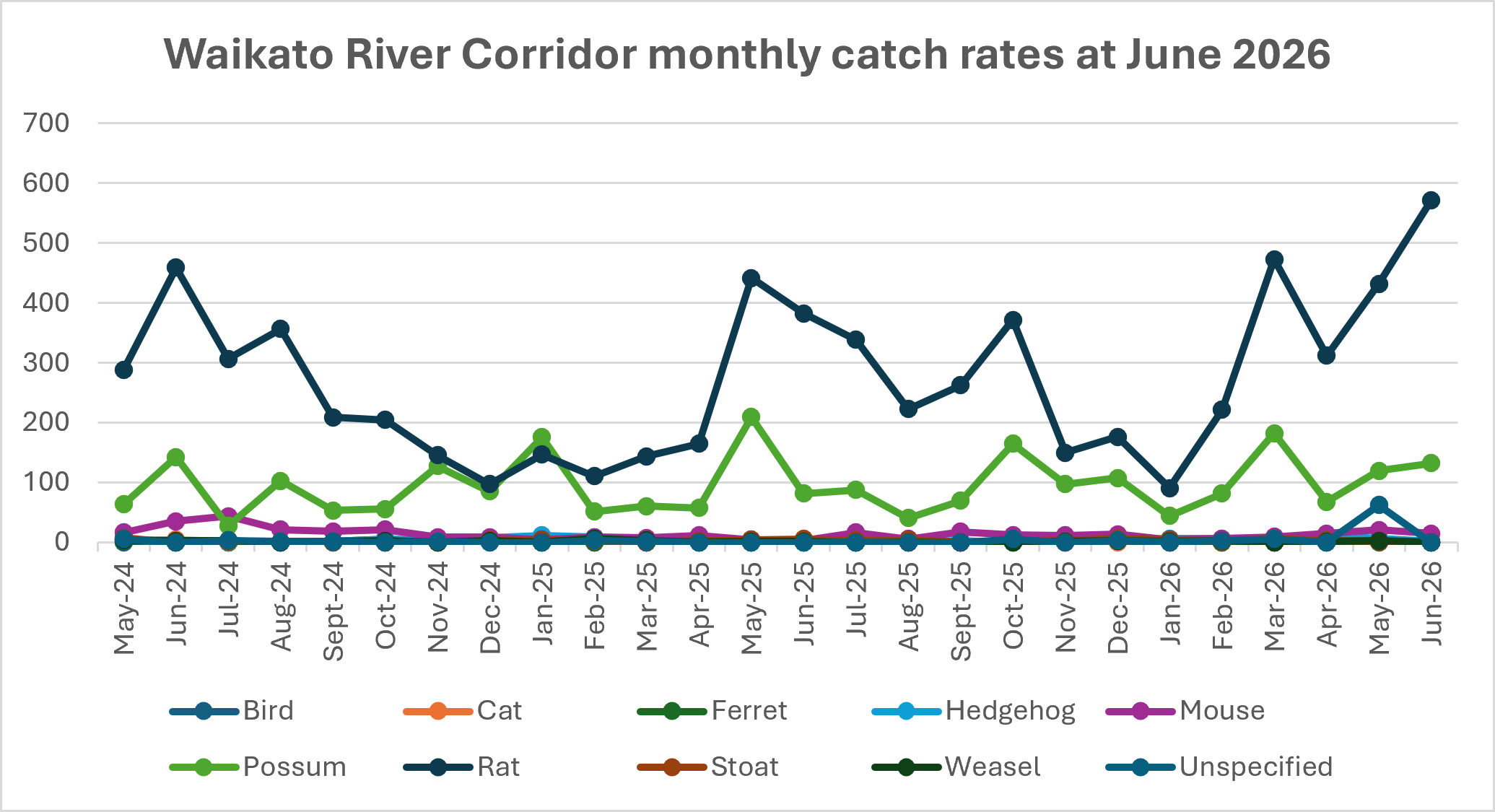
In the Waikato River Corridor, we see a rapid spike in catch numbers (especially rats) during the mid-winter which also occurred in previous years. During the year there has been a total of 25 cats trapped in the River Corridor area. This area has 395 traps.
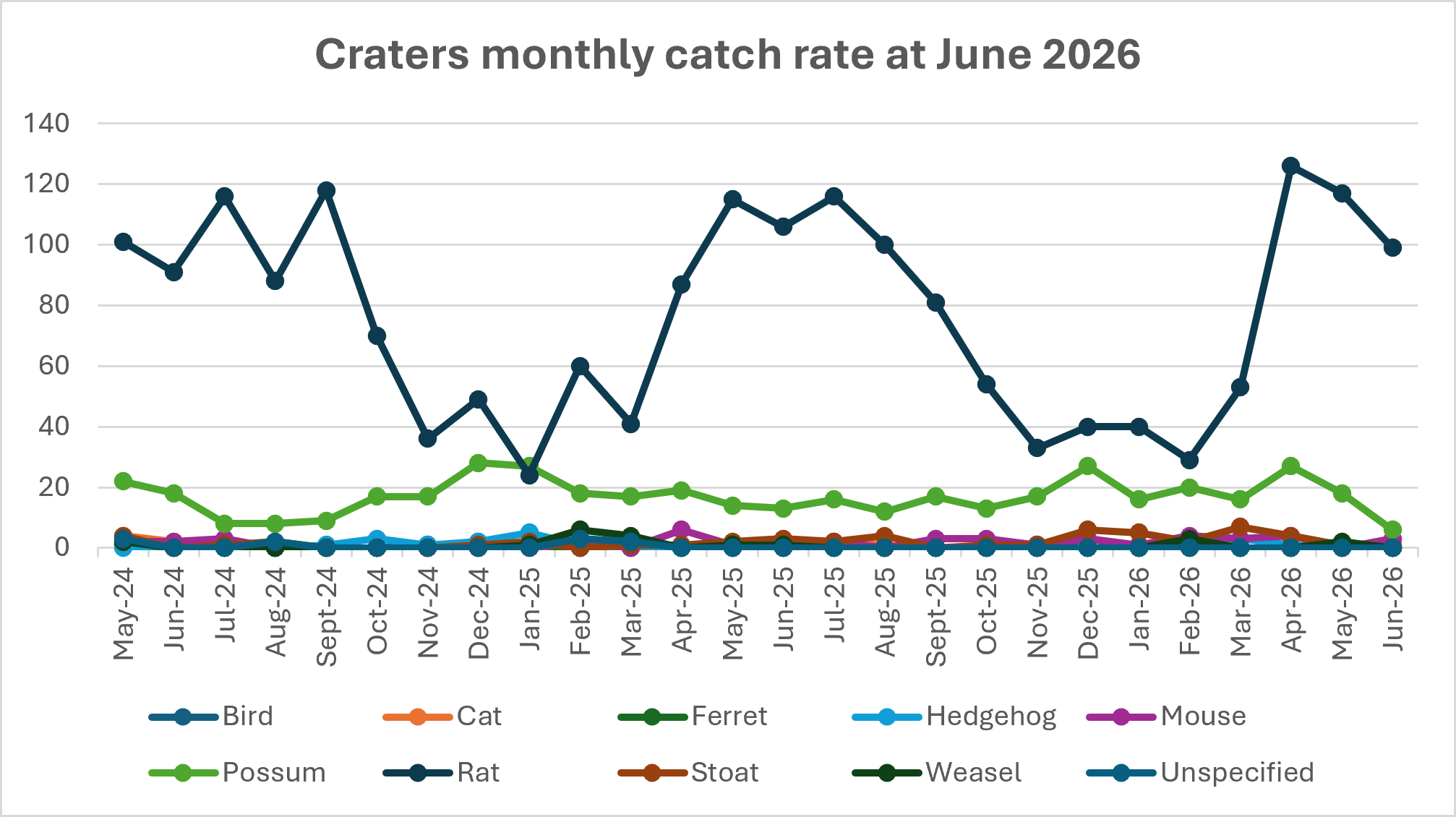
In the Craters trap area, we see a similar repeat of the high winter catch rate for rats as in the previous winter period, with possum captures consistent throughout the year. This area has 188 traps.
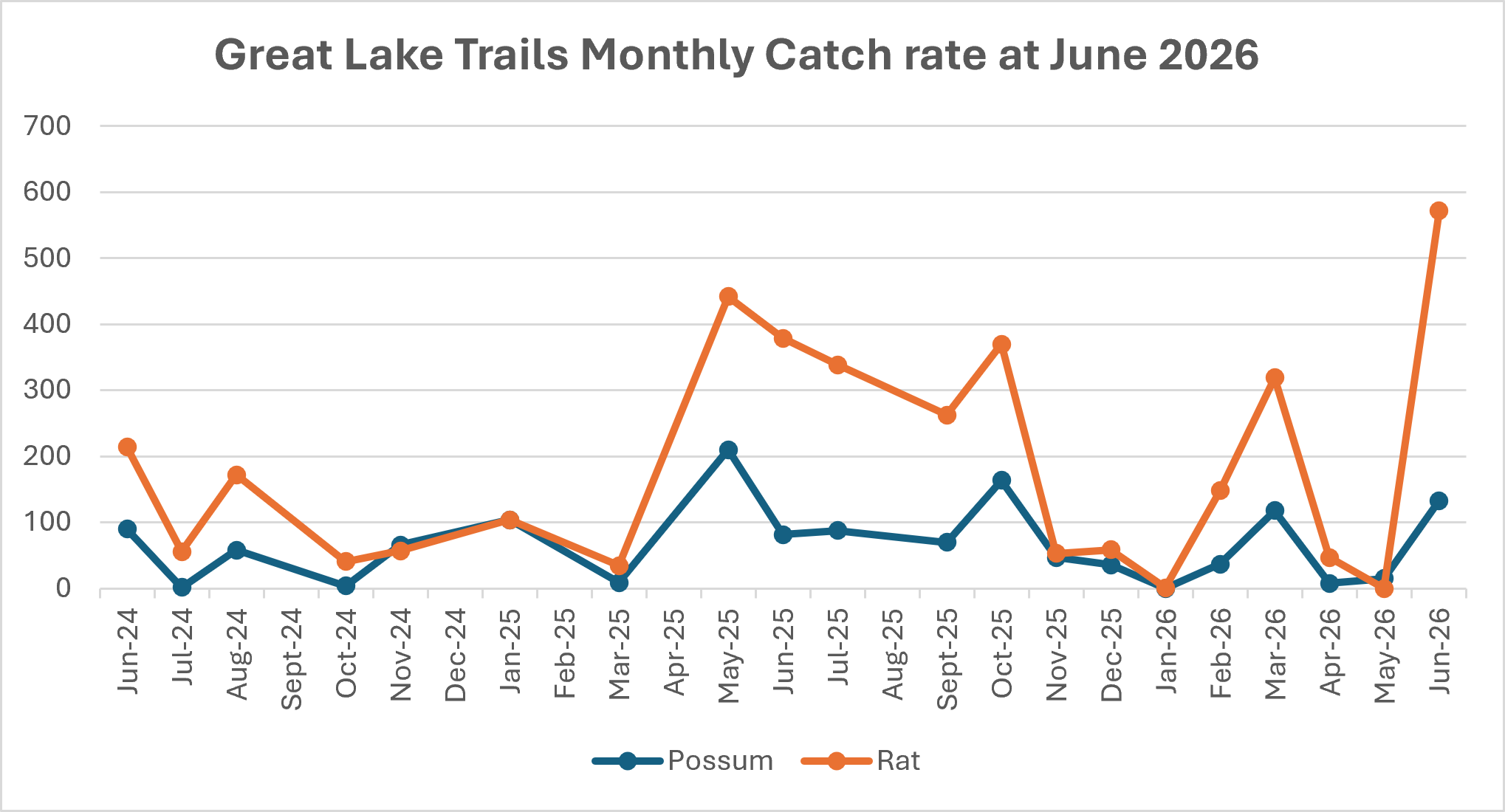
The trap data for GLT is only gathered intermittently from the AT220 traps so tends to go up and down on a monthly basis. The rapid rise in rat capture in June reflects the new catch data from the new Waihora trap line. This area has 96 traps.